
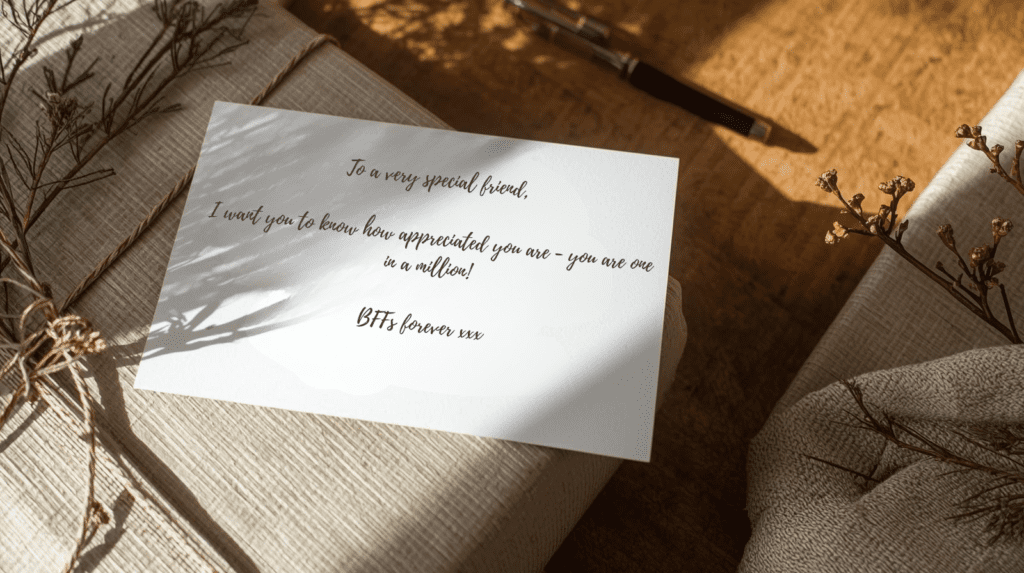
Gift Messaging That Feels Thoughtful, Not Forced
For many people, the hardest part of giving a gift isn’t choosing the item — it’s writing the message that goes with it. A blank card can feel unexpectedly intimidating, especially when the relationship is complex, the occasion is sensitive, or you don’t want to sound overly sentimental.
The pressure often comes from the idea that a gift message needs to be clever, emotional, or perfectly worded. In reality, the most meaningful messages are usually simple. They sound like something you would say out loud. They reflect awareness rather than performance.
This guide focuses on how to write gift messages that feel natural, appropriate, and quietly thoughtful — without relying on clichés or scripted phrases.
Why Gift Messages Matter More Than People Expect
A gift message provides context. It tells the recipient why the gift exists, not just what it is. Even a short note can turn something ordinary into something personal by anchoring it to a relationship, a moment, or an intention.
Importantly, the message doesn’t need to explain the gift. It only needs to situate it. When the message feels sincere, the gift itself tends to be received more generously — regardless of size or cost.
When Less Is Better Than More
Overwriting is one of the most common mistakes in gift messaging. Long explanations, jokes that need context, or overly emotional language can unintentionally make a message feel heavy or awkward.
Short messages work because they leave space. A sentence or two that feels genuine is almost always more effective than a paragraph that tries to cover every possible feeling. Clarity is kinder than cleverness.
Writing for Different Relationships (Without Changing Your Voice)
Many people feel they need a completely different tone for every relationship — professional, romantic, familial, casual. In practice, consistency matters more than reinvention.
What changes isn’t your voice, but your level of specificity. A message for a colleague might acknowledge appreciation or teamwork. A message for a friend might reference shared time or humour. A message for family might focus on care or familiarity. The structure can stay simple across all of them.
Messages That Support the Gift Without Explaining It
A common trap is trying to justify the gift choice within the message. This often backfires, especially in last-minute or low-pressure gifting situations.
Instead of explaining why you chose something, it’s usually more effective to acknowledge how you hope it fits into the recipient’s life. This keeps the message forward-facing and avoids unnecessary self-consciousness.
What to Avoid in Gift Messaging
Certain phrases appear often because they feel safe, but they can flatten the message rather than enhance it. Apologising for the gift, overemphasising effort, or framing the message around obligation tends to shift attention away from the recipient.
Similarly, inside jokes that only partially land, or humour that undercuts the gesture, can dilute the intention. If the message would feel awkward said aloud, it’s worth revising.
Writing Messages for Difficult or Neutral Occasions
Not every gift is given in a celebratory context. Thank-you gifts, sympathy gestures, professional milestones, or “just because” moments benefit from a calmer tone.
In these cases, neutrality is a strength. A message that simply acknowledges the moment without trying to elevate it often feels more respectful and appropriate than one that reaches for emotion.
Handwritten vs Printed Messages
Handwritten messages are often perceived as more personal, but only when the content feels natural. A printed message with thoughtful wording is far more effective than handwriting that feels rushed or uncomfortable.
The key difference lies in intention, not format. Choose the option that allows you to write clearly and calmly.
Thoughtful Gift Message Examples You Can Adapt
If you’re unsure what to write, it can help to choose a message based on context rather than occasion. The examples below are designed to feel natural and flexible — you can use them as-is or adjust a word or two to suit your voice.
For Someone You Know Well
Choose one of these when the relationship is personal and familiar.
- “I saw this and thought of you. I hope it finds a place in your everyday.”
- “Just a small something I thought you’d enjoy — no occasion needed.”
- “This felt like you. I hope it gets good use.”
These messages work because they’re specific without being emotional. They signal attention rather than performance.
For a Friend
Choose one of these when you want warmth without sentimentality.
- “I thought this might make your day a little easier.”
- “A small thank-you for being you.”
- “Something useful, because you always appreciate the practical things.”
They keep the tone light and genuine, without overexplaining the gift.
For a Colleague or Professional Relationship
Choose one of these when neutrality and clarity matter.
- “A small token of thanks — I’ve really appreciated working with you.”
- “With thanks for your support and collaboration.”
- “Something I hope you’ll enjoy. Thank you for all you do.”
These messages are appropriate, contained, and easy to receive.
For Someone You Don’t Know Very Well
Choose one of these when social ease is the priority.
- “I hope you enjoy this.”
- “A little something — thank you.”
- “With best wishes.”
Short, neutral messages reduce awkwardness and keep the focus on the gesture itself.
For a Last-Minute or Low-Pressure Gift
Choose one of these when timing is tight but intention matters.
- “I wanted to give you something I thought you’d actually use.”
- “Simple, but chosen with you in mind.”
- “This felt right for you.”
They subtly reinforce thoughtfulness without mentioning time or urgency.
For a Gift That Quietly Ignores the Occasion
Choose one of these when you don’t want to reference the event directly.
- “Just because.”
- “No reason — I hope you enjoy it.”
- “I thought you might like this.”
These work especially well for low-key birthdays, anti-Valentine’s recipients, or people who dislike fuss.
How to Choose the Right Message for the Situation
The most effective gift messages answer one quiet question: What does this gift need to say that the object itself can’t? Sometimes the answer is gratitude. Sometimes it’s recognition. Sometimes it’s simply presence.
This mindset aligns closely with The Art of Thoughtful Gifting: Why It Matters, where intention consistently outweighs performance. You may also find Best Last-Minute Gifts That Still Feel Thoughtful helpful when messages are written under time pressure and clarity matters most.
Research discussed by the American Psychological Association also suggests that authenticity and perceived intention play a significant role in how gestures are emotionally received — reinforcing why simple, sincere messages tend to land best.
Final Thoughts
A gift message doesn’t need to impress. It needs to feel true.
When the words sound like something you would actually say, they do their job quietly and effectively. The gift feels more considered, the moment feels less awkward, and the message becomes part of what’s remembered — not because it was perfect, but because it fit.